
If your heating comes on but the radiators seem to take far longer than they used to, it does not necessarily mean there is something wrong with the boiler itself. The problem can sit anywhere between the boiler, controls and the way hot water is circulating around the system.
After more than 35 years working with heating systems, one of the first things I would want to know is whether every radiator is slow to heat or only certain ones. That distinction can quickly tell you whether you are looking at a whole-system issue or something local to individual radiators.
Are all the radiators heating slowly?
If every radiator is slow to heat, the problem may relate to the boiler, controls, pump or another part of the central-heating system. If only one or two radiators are affected while the others become hot quickly, the issue is more likely to be local to those radiators. That distinction can help narrow down where the problem sits.
It is also useful to notice which radiators heat first and which heat last. If the ones nearest the boiler become hot quickly while those further away remain cool for much longer, the system may not be distributing heat evenly.
Your heating system may need balancing
One of the most common reasons some radiators heat quickly while others lag behind is that the heating system is out of balance.
Hot water will naturally take the easiest route around the system. If the radiators closest to the boiler receive too much flow, radiators further away may take much longer to warm up. Balancing involves adjusting the flow through each radiator so that heat is distributed more evenly around the property.
This can become noticeable after radiators have been changed, valves have been adjusted or other work has been carried out on the heating system. If the first radiator is hot while the last one is still barely warm, balancing is one of the things I would consider.
Trapped air can slow a radiator down
If a radiator is warm towards the bottom but remains cold or noticeably cooler at the top, trapped air may be preventing hot water from filling the radiator properly. Air rises to the top, so that temperature pattern is a useful clue.
Bleeding the radiator can release the trapped air and allow hot water to circulate through more of the radiator. If you do bleed radiators, check the boiler pressure afterwards because releasing air and some water can cause the system pressure to fall.
If the same radiator repeatedly fills with air, however, I would want to understand why rather than treating bleeding as a permanent fix.
Sludge can restrict water flow
A different temperature pattern can indicate a different problem. If a radiator becomes hot at the top but remains cold towards the bottom, sludge or restricted circulation becomes more likely.
Over time, corrosion inside the heating system can create dark debris that settles in radiators and pipework. As that build-up increases, hot water can struggle to circulate properly through the radiator. You may also notice that some rooms take considerably longer to warm up than others.
Bleeding will not remove sludge from the bottom of a radiator, so if that is the pattern you are seeing, the system needs a different diagnosis.
Check the radiator valves
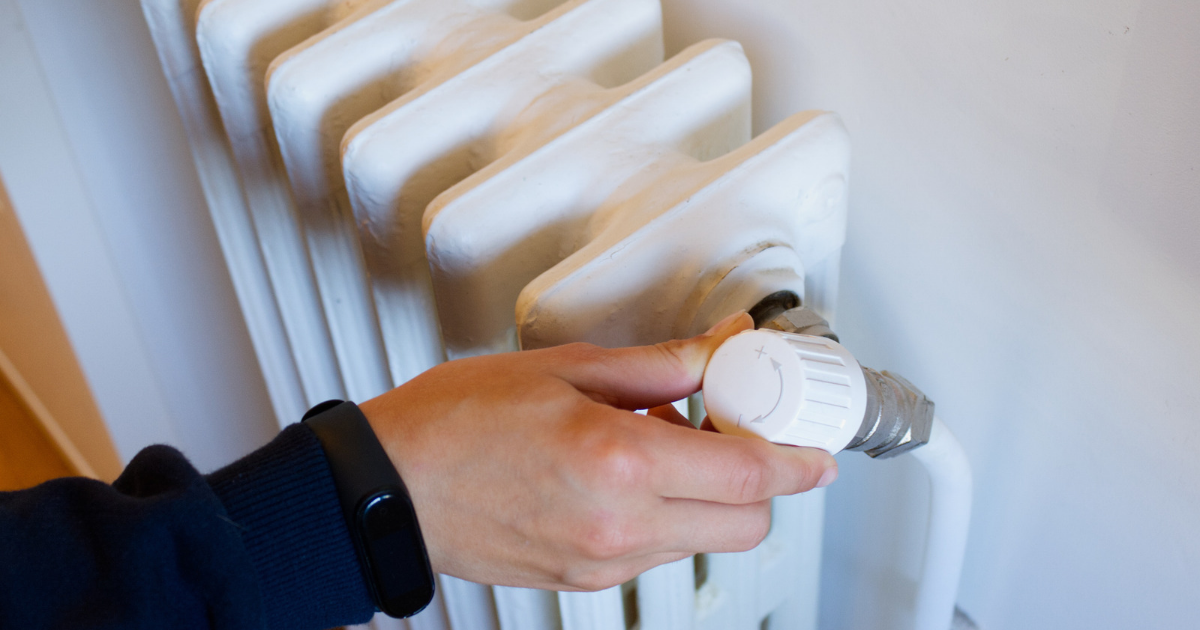
A radiator cannot heat properly if the flow through it is restricted. Make sure thermostatic radiator valves, or TRVs, are not simply turned down.
If one radiator is much slower than the rest, a sticking or partially closed valve may also be restricting the flow of hot water. Do not force valves or start dismantling them if you are unsure what you are doing. If a valve appears to be stuck, it is better to have it checked.
The boiler temperature may be set too low
The speed at which radiators warm up also depends on the temperature of the water being sent around the heating system.
If the boiler’s central-heating flow temperature has been turned down significantly, the radiators may feel cooler and the property can take longer to warm up. That does not automatically mean the setting is wrong. Lower flow temperatures can work well in appropriately designed systems, but whether they are suitable depends on the property, radiator sizes, outside temperature and heating system.
If the house consistently struggles to reach the temperature set on the thermostat, the overall system setup may need reviewing rather than simply turning everything up as high as possible.
The circulation pump could be struggling
The circulation pump moves heated water from the boiler around the heating system. If it is not operating correctly, hot water may move around the system more slowly than it should.
That can lead to radiators taking longer to warm up or parts of the property heating unevenly. A pump problem can sometimes produce noises or other symptoms, but it should not be diagnosed from slow radiators alone because balancing problems, air, sludge and valves can all create similar behaviour.
This is why I would look at the whole pattern before recommending a component replacement.
Check the boiler pressure
Low system pressure can affect the way a sealed heating system operates. The correct pressure depends on the boiler, so your manufacturer’s instructions should always be the reference.
If the pressure is lower than recommended, the system may not perform properly. If you know how to repressurise your particular boiler safely, follow the manufacturer’s instructions. If the pressure keeps dropping again after being restored, however, the underlying reason needs investigating.
Is the thermostat causing the system to heat slowly?
Sometimes the heating system itself is capable of working normally, but the controls are limiting when or how long it runs.
Check that the room thermostat is set to the temperature you actually want and that any heating schedule allows enough time for the property to warm up. If you use smart controls or multiple heating zones, make sure those settings are also correct.
A system that only receives short periods of heating demand may never get the opportunity to bring the whole property up to temperature.
How long should radiators take to heat up?
There is no single correct time because every heating system is different. A small property with a modern boiler and well-balanced radiators may warm up relatively quickly, while a larger property, older heating system or home starting from a much lower temperature can naturally take longer.
What I would pay more attention to is a change from normal behaviour. If the same heating system used to warm the radiators evenly and relatively quickly but now takes much longer, something may have changed within the system.
Likewise, if one part of the house warms up much faster than another, that imbalance is worth investigating.
What can you safely check yourself?
Before calling an engineer, it can help to check:
Whether every radiator is slow or only certain ones
Whether radiators are cold at the top or bottom
Whether radiator valves are open
Whether the boiler pressure is within the manufacturer’s recommended range
Whether the thermostat and heating schedule are set correctly
Which radiators heat first and which heat last
Whether you can hear gurgling, banging or other unusual noises
Those observations can often give a good indication of where the problem sits.
When should you call an engineer?
I would have the heating system checked if the radiators have become noticeably slower to warm up, some rooms consistently remain colder than others, the same radiators repeatedly need bleeding or you are seeing signs of sludge, poor circulation or pressure loss.
The same applies if all the controls appear correct but the property still takes an unusually long time to reach temperature. The important thing is not simply making the boiler work harder. It is understanding why the heat is not being distributed around the system efficiently.
Local help in West London
West Gas Service provides gas, heating, plumbing and air conditioning services across West London, Surrey and surrounding areas. With more than 35 years of experience, we regularly diagnose slow and uneven heating systems, including radiator balancing, trapped air, sludge, circulation problems, valves and boiler faults.
If your radiators are taking too long to heat up, we can assess the system, identify what is slowing it down and explain what actually needs doing.
Call 07866 567112, email ralphwestgas@gmail.com, or submit a form and a qualified engineer will be in touch.
